
Differentiation Goes Beyond Visual Identity
When dealing with a market that is already saturated, the differentiation is often misunderstood with what you see; new colors, a new or updated logo, or even a clever tagline. While these elements can be of support in differentiation, they rarely create it on their own. The true differentiation comes from how a product or brand delivers value in a way that is meaningful and distinct but also relevant to its target audience.
Another important aspect of differentiation is consistency across touchpoints. A brand can’t claim to be a good premium customer centered if the pricing, messaging and the user experiences are total opposites. Differentiation is reinforced when every interaction supports the same strategic position.
Strategic Trade Off Build Brand Identity
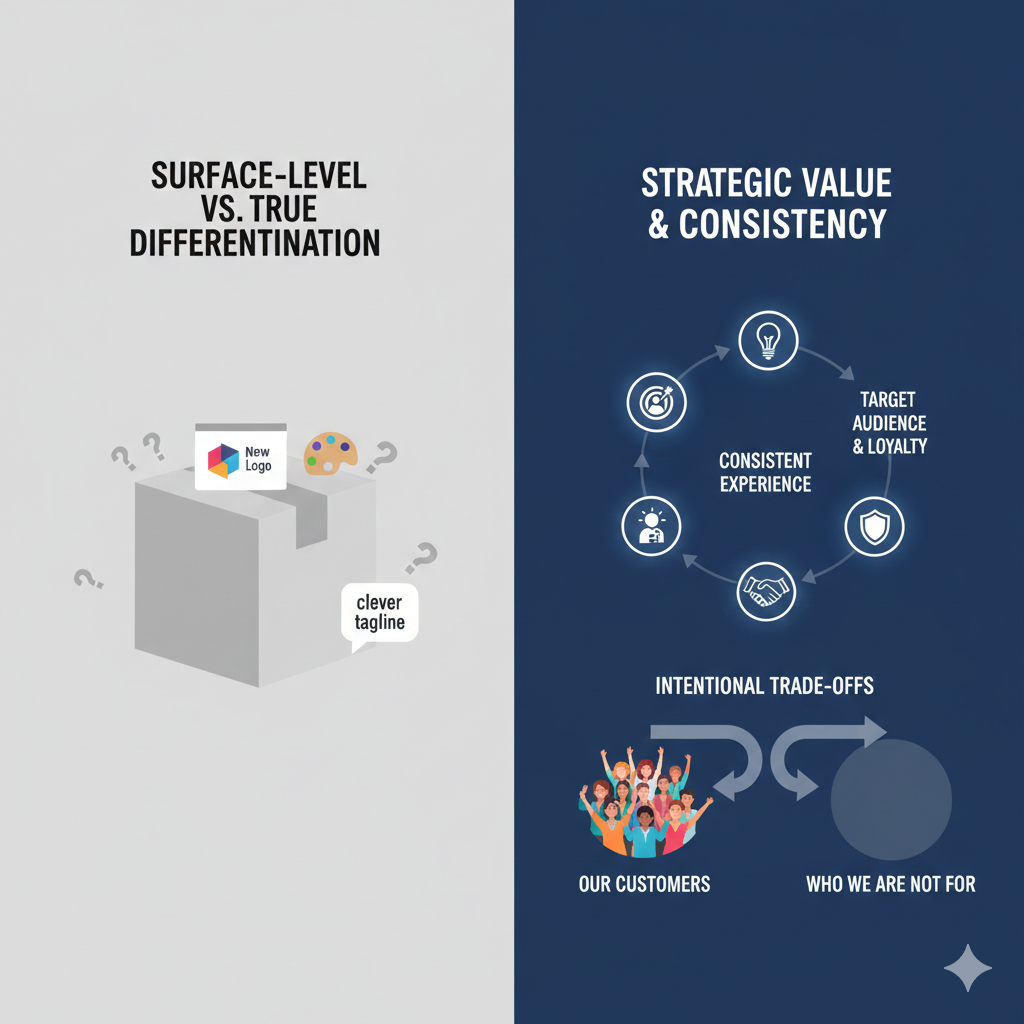
Most importantly, differentiation does not mean you have to appeal to everyone. Brands that try to do everything and be there for everyone very often blend into the background.
Having a strategic differentiation requires intentional trade offs, this means deciding who the brand is not for. This clarity will strengthen the brand identity and also build a bigger and stronger loyalty with the right customers.
In other words, differentiation is not a one time decision but an ongoing strategic discipline. Markets grow, competitors adapt, and customers change expectations. Brands that continuously reassess and refine how they deliver unique value are far more likely to remain relevant and competitive in the long run.
No responses yet